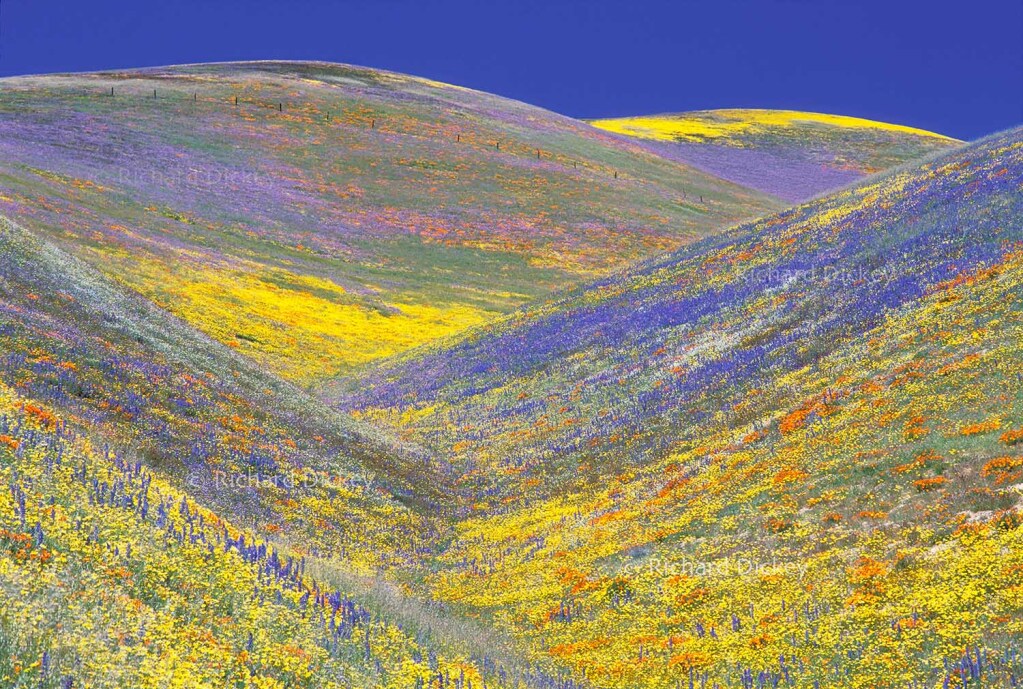
The Extraordinary Diversity Behind California’s Wildflower Blooms
With its distinct Mediterranean climate and varied landscapes, California’s native flora has evolved a unique concentration of endemic plants at such a global scale that it is scientifically recognized and known as the “California Floristic Province” (CFP). The CFP has been designated as one of Earth’s biological hotspots due to its diversity and endangered status. Of all these botanical treasures, none is more mercurial and fleeting than California’s springtime wildflower displays. Evolved in response to an unforgiving environment with inconstant seasons, these dense floral blooms are similar to blooms of ocean plankton, deploying a strategy of sheer numbers to ensure survival of the few. Additionally, seeds adapted to survive boom-or-bust seasons and prolonged droughts have further refined this genetic legacy. After eons of distillation and localized adaptations, California is blessed with hills, valleys, and canyons of wonder—a brief flash of life so intense that it defies imagination.
From its coastlines to its deserts, California is anything but a single, homogeneous environment. It is a vast and complex mosaic of landscapes that includes coastal plains, mountain ranges, valleys, inland plateaus and two remarkably different deserts—a high desert and a low desert. Rising from sea level to over 14,000 feet in elevation, California’s varied geology creates an extraordinary diversity of habitats, each with its own climate and array of localized microclimates.
This remarkable diversity of habitats is precisely why the CFP is one of the most biologically diverse regions on Earth. It is home to some of the world’s oldest, tallest and most massive plants. Yet of all these botanical treasures, none is more mercurial and fleeting than California’s springtime wildflower displays.
When the Wildflowers Bloom
California’s wildflower seasons are anything but predictable. While rainfall and temperature play the leading roles, nature rarely follows a script. Some years of abundant rain produce modest displays, while drier seasons can reward observers with extraordinary blooms in unexpected places.
Localized weather events are often responsible for these surprises. Repeated storms tracking across the same landscape—a process known as training—can saturate a particular canyon, hillside, or valley while leaving neighboring areas untouched. The result may be a fleeting “micro bloom,” reminding us that California’s wildflowers are as much about timing and place as they are about the weather itself.
California’s wildflower season unfolds like a wave across the landscape, beginning in the deserts and coastal plains of late winter and climbing steadily into the mountains by summer. The following guide outlines the typical bloom periods and locations for each elevation zone.
Lower Elevations – Sea Level to 2,500 feet
Typical Bloom Period: Mid-February to Mid-March
Common Locations: Coastal plains, hills, and canyons; lower desert habitats and alluvial fans, including Death Valley, Anza-Borrego, the San Joaquin and Cuyama Valleys, lower elevations of Joshua Tree, the Algodones Dunes, Santa Monica Mountains, and Arvin, California.
Mid Elevations – 3,000 to 5,000 feet
Typical Bloom Period: Mid-March to Mid-May
Common Locations: Upper desert habitats and foothills, including the California Poppy Preserve, western and central Antelope Valley, Tejon Ranch, Carrizo Plain, Gorman, Wind Wolves, Mojave National Preserve, Kelso Valley, Cuyamaca, Lake Isabella, Pinnacles National Park, and the mid-elevations of Joshua Tree and Death Valley.
Higher Elevations – 5,000 to 10,000+ feet
Typical Bloom Period: Mid-May to Mid-August
Common Locations: Mountain and alpine habitats, including the eastern Sierra Nevada, Sequoia and Kings Canyon, Lassen Volcanic National Park, and the highest elevations of Death Valley, where late-season wildflower blooms can persist well into summer.
Why do Wildflowers Matter
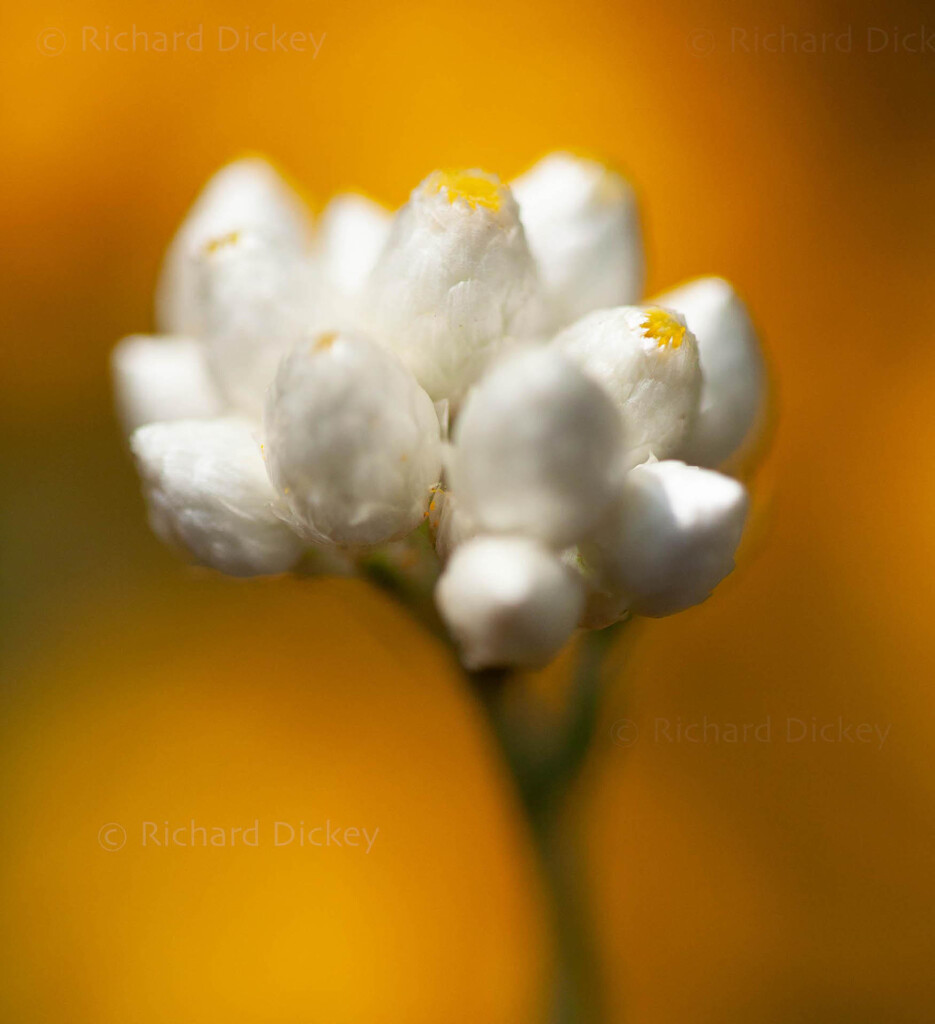
California’s wildflowers are more than a seasonal spectacle. They are the visible expression of a healthy and functioning ecosystem, revealing the intricate relationship between climate, geology, elevation, and time. For a few brief weeks each year, landscapes that appear dormant awaken in a remarkable display of color, reminding us that life is often present long before we notice it.
Wildflowers sustain countless species of native insects, birds, and wildlife while providing an important measure of ecological health. Their appearance—or absence—can tell the story of rainfall patterns, changing climate conditions, and the resilience of the landscapes they inhabit. In many ways, wildflowers are among California’s most eloquent storytellers.
California is one of the most biologically diverse places on Earth, home to thousands of native plant species found nowhere else. From coastal bluffs and desert valleys to alpine meadows high in the mountains, wildflowers are woven into the identity of the state’s landscapes. Long before roads, cities, and agriculture reshaped the land, vast spring blooms once stretched across California’s hills and valleys, inspiring explorers, settlers, and generations of Californians fortunate enough to witness them.
Wildflowers matter because they teach us something that modern life often asks us to forget—some of the most extraordinary things in nature cannot be scheduled or guaranteed. They arrive on their own terms. A superbloom may last only a few weeks and never return to the same place in quite the same way again. Entire landscapes that once bloomed regularly have been altered by development, changes in land use, invasive species, and shifting climate patterns. In many cases, photographs have become historical records of places that no longer exist as they once did.
Perhaps most importantly, wildflowers matter because they invite us to slow down and pay attention. They remind us that beauty can be fleeting, that healthy landscapes are worth protecting, and that we are merely passing through places that have been evolving for millennia. To witness a wildflower bloom is to experience a moment in time that can never be perfectly repeated—a gift of season, weather, and place.
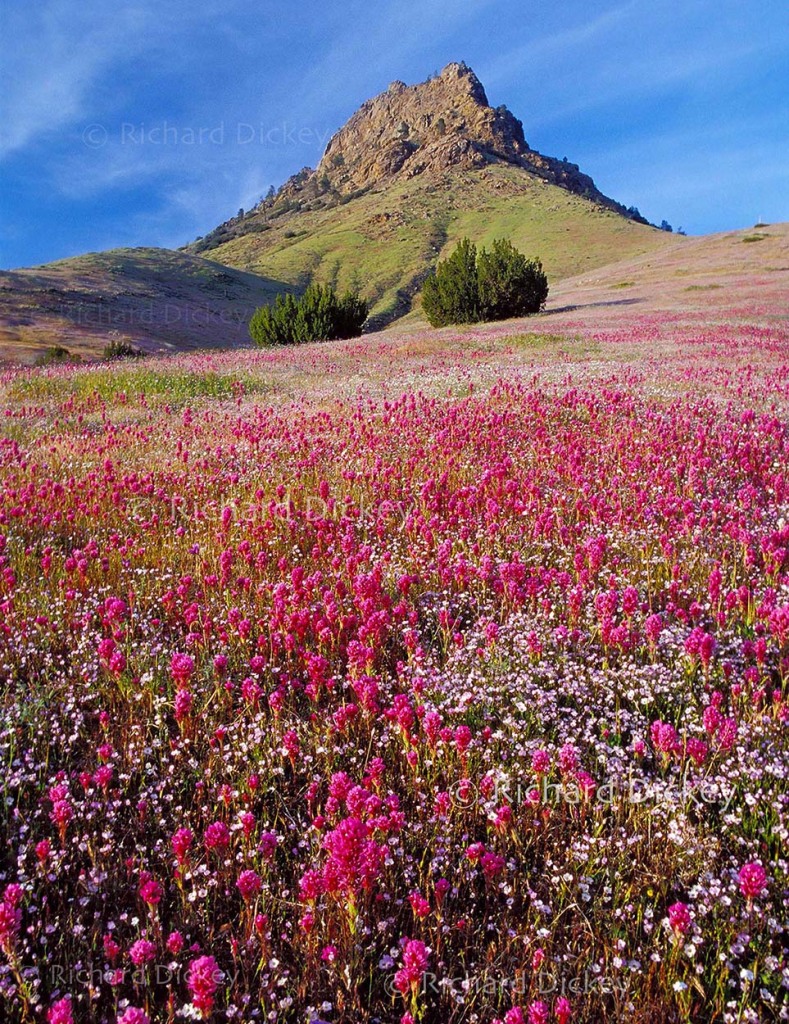
As the site evolves in the coming weeks and months, additional material will be released in phases. Thank you for your patience as this decades-long body of work is brought back into bloom. All the images on this website were created by a human and not AI. Feedback and comments are encouraged.
Check back often — the landscape is still unfolding.