Micro Bloom Under a Cold Sun
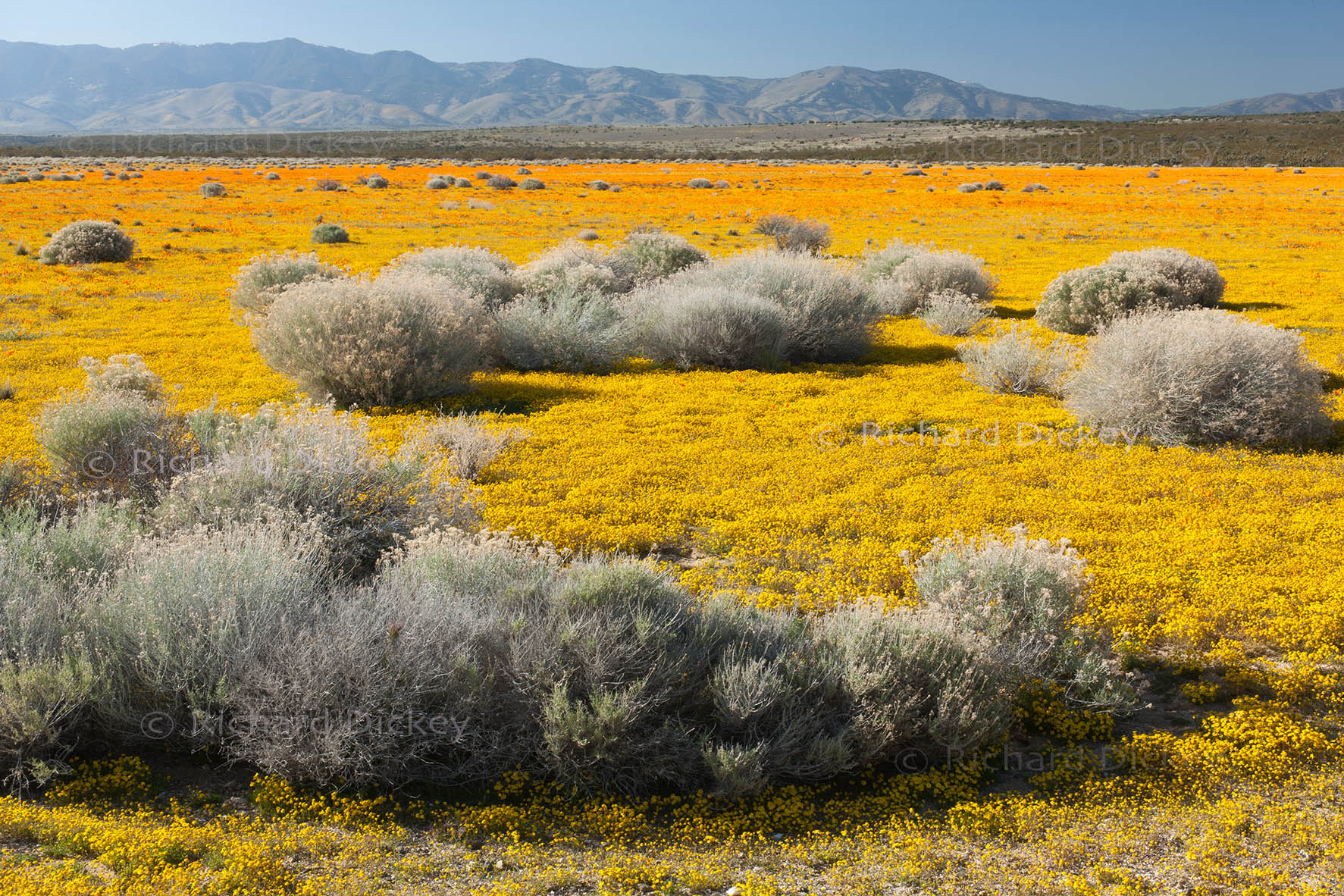
An intensely localized concentration of California poppies, goldfields and gray rabbitbrush appears on the northern edge of central Antelope Valley during the unusually cold spring of 2006. Beyond the immediate bloom, much of the surrounding landscape shows little comparable flowering, making the isolated patch of color visible from miles away. Although photographed beneath bright sunshine, cold temperatures and persistent wind kept many of the California poppies partially or completely closed.
I first noticed this bloom from miles away while driving through what otherwise appeared to be a poor wildflower year. The unusually cold spring had delayed plant development across Southern California, yet this small area stood out dramatically from the surrounding landscape.
Dirt roads eventually led into the bloom. California poppies and goldfields covered the ground among gray rabbitbrush while nearby country showed very little flowering. The day was sunny, but it remained unusually cold and windy. Both conditions can keep California poppies closed, and many of the flowers stayed tightly folded despite the bright sunlight.
Over years of following California wildflower seasons, isolated displays like this became what I came to call micro blooms—small areas capable of producing exceptional flower density while nearby landscapes remain comparatively quiet. In my field observations, these blooms have consistently appeared where localized training storms repeatedly crossed the same ground, concentrating rainfall within a relatively narrow area.