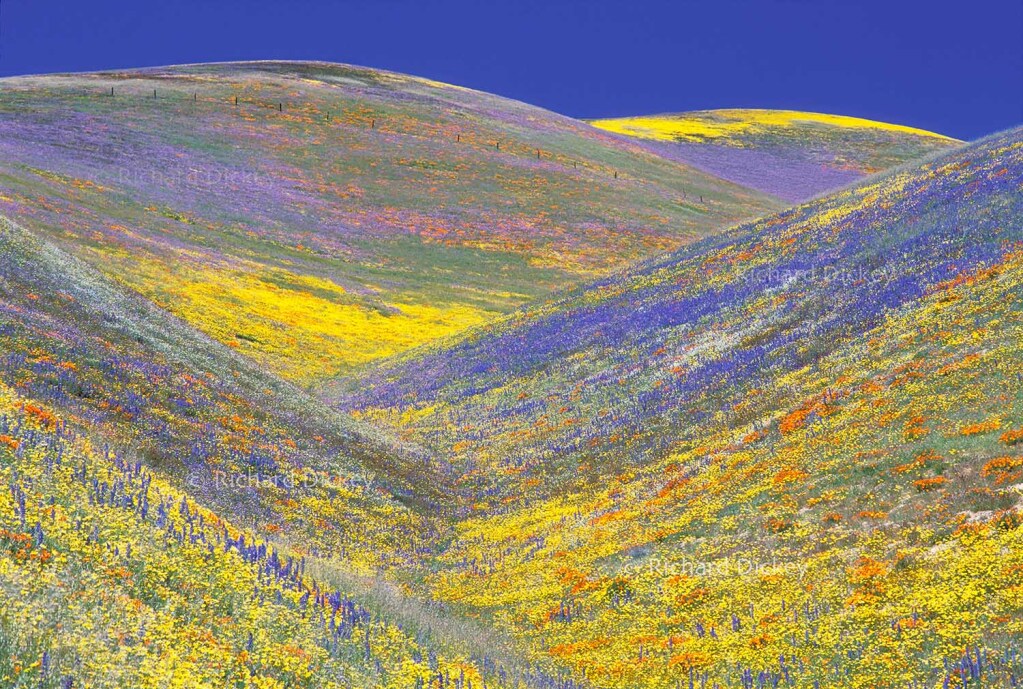
Gorman, California · 2003 · Fujichrome Velvia transparency film
Where California’s Wildflowers Grow
An Extraordinary Mosaic of Landscapes, Climates and Native Flora
From coastlines and valleys to high mountains and two very different deserts, California is anything but a single environment. Elevations ranging from sea level to more than 14,000 feet create an extraordinary mosaic of habitats, climates and localized microclimates.
This diversity helped shape the California Floristic Province, one of the world’s great biodiversity hotspots and home to an extraordinary concentration of native and endemic plants. Adapted to drought, irregular rainfall and boom-and-bust seasons, wildflower seeds can remain dormant until the right combination of moisture, temperature and timing briefly transforms hills, valleys and canyons into immense displays of color.
California’s Wildflower Season by Elevation
Across the state, the season generally unfolds like a wave, beginning in the low deserts and coastal plains of late winter and climbing steadily into foothills and mountains by summer. Elevation provides a useful guide, but rainfall, temperature and localized weather can move the season forward, delay it or create an unexpected bloom in a very small area.
When the Wildflowers Bloom
California’s wildflower seasons are anything but predictable. Rainfall and temperature play leading roles, but localized weather can create extraordinary surprises. Repeated storms tracking across the same narrow landscape—a process known as training—may saturate one canyon, hillside or valley while nearby areas receive far less, sometimes producing an intensely localized micro bloom. The elevation zones below are a useful guide, but the actual timing of any bloom always depends on the weather.
Coastal plains, hills and canyons; lower desert habitats and alluvial fans, including Death Valley, Anza-Borrego, the San Joaquin and Cuyama Valleys, lower elevations of Joshua Tree, the Algodones Dunes, Santa Monica Mountains and Arvin, California.
Upper desert habitats and foothills, including the California Poppy Preserve, western and central Antelope Valley, Tejon Ranch, Carrizo Plain, Gorman, Wind Wolves, Mojave National Preserve, Kelso Valley, Cuyamaca, Lake Isabella, Pinnacles National Park and the mid-elevations of Joshua Tree and Death Valley.
Mountain forests, high-elevation slopes and alpine meadows, including the Eastern Sierra, the upper elevations of Death Valley, Sequoia and Kings Canyon National Parks and Lassen Volcanic National Park.
Why Native Plants and Wildflowers Matter
California’s native plants and wildflowers are more than a seasonal spectacle. They sustain native insects, birds and wildlife while revealing the relationship between climate, geology, elevation and time. Their appearance—or absence—can also provide a visible measure of changing conditions across the landscapes they inhabit.
California’s extraordinary botanical diversity includes thousands of native plant species, many found nowhere else. Long before roads, cities and agriculture reshaped the land, vast spring blooms stretched across hills and valleys. Today, photographs can also become historical records of landscapes altered by development, changing land use, invasive species and shifting climate patterns.
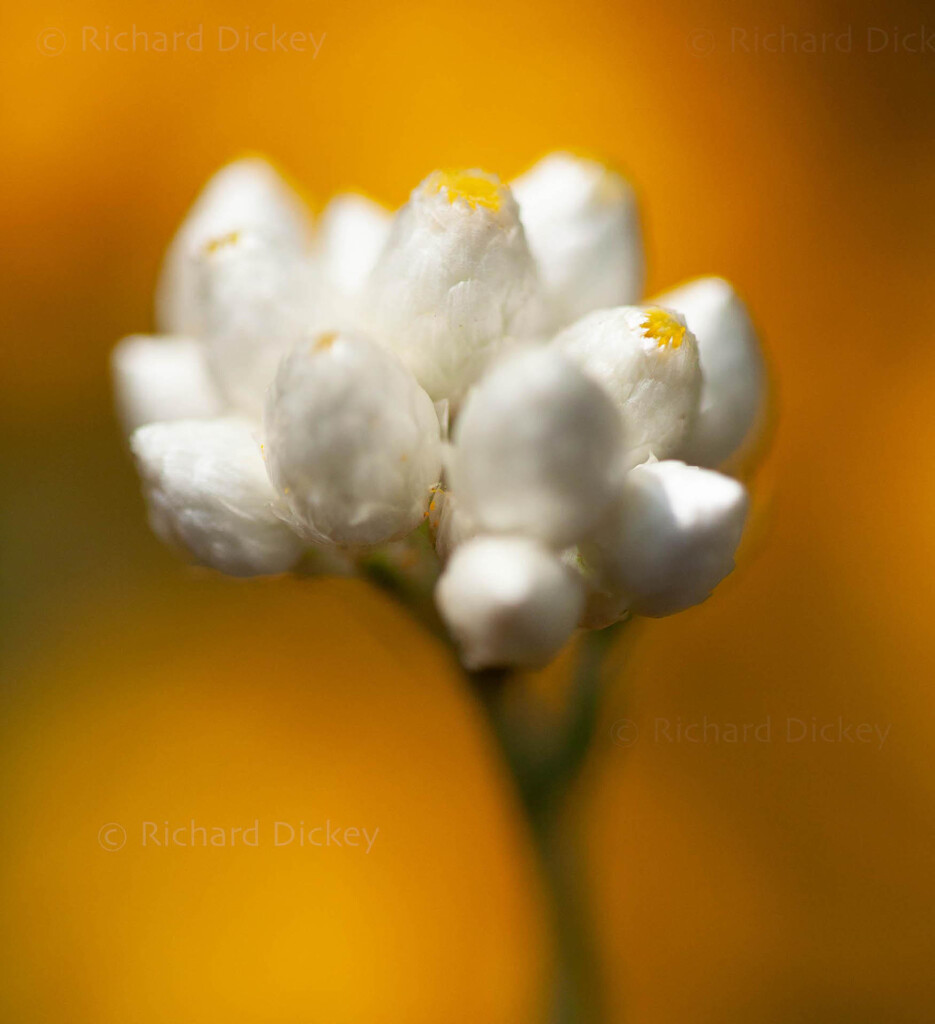
Stewardship Matters
California’s wildflower landscapes have never existed apart from animals or people. For thousands of years, California Native peoples cared for landscapes through practices that included cultural burning, selective harvesting and the tending of plants and habitats. Native herbivores also grazed California’s grasslands long before domestic livestock arrived.
Bringing a landscape back toward ecological health does not always mean simply removing human activity. In some places, carefully managed grazing can reduce competing grasses and accumulated vegetation, helping maintain open conditions in which native annual wildflowers can flourish. In others, poorly timed or excessive grazing can be damaging. The ecology, timing and history of each landscape matter.
This 2001 photograph from Gorman provides a visible example from the Feral Flowers archive. California wildflowers flourished across the steep hillside being grazed while the lower area beyond the fence showed comparatively little flowering. The cattle were keeping competing grasses and accumulated vegetation in check, helping preserve the open conditions annual wildflowers need to germinate and grow. On a slope like this, hoof action may also break up an otherwise smooth surface, creating small depressions and irregularities that interrupt runoff, trap small amounts of sediment and seed and create additional microsites for germination.
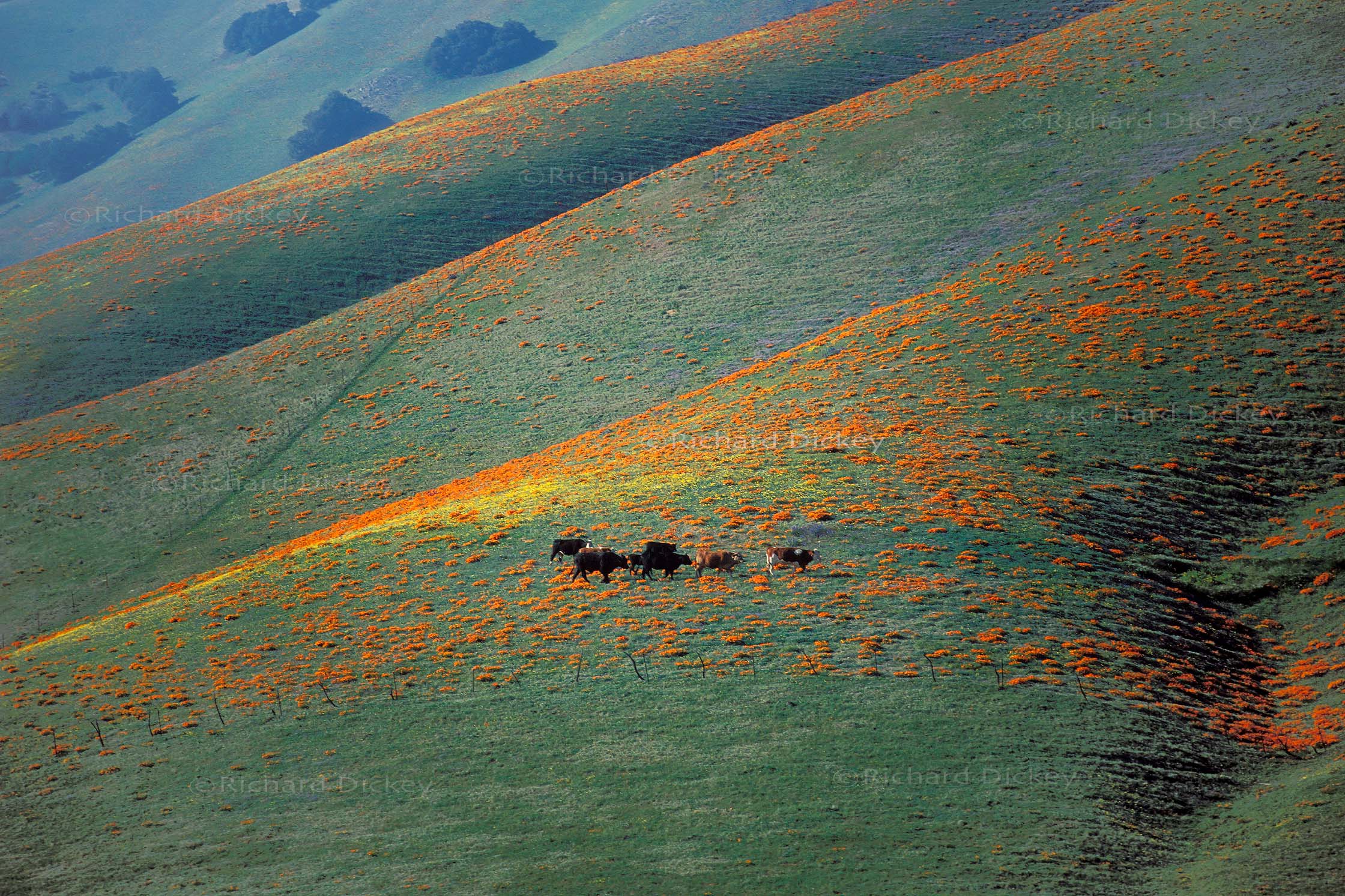
Find the main fence line below the cattle, then notice the second fence farther left. Some flowers appear beyond that left fence because openings allowed cattle to pass through and graze portions of the upper hillside. The lower area below the main fence remained inaccessible to the cattle. Zoom in and compare how differently the landscape responded across these grazing boundaries.
The photograph does not suggest that grazing is beneficial everywhere. Rather, it illustrates a larger lesson: bringing land “back to nature” can require understanding the ecological processes that once helped maintain it. Indigenous stewardship, beneficial fire, carefully managed grazing where appropriate and control of invasive plants can all play a role in restoring a functioning landscape.
Wildflowers also offer something deeply human. Their seasons cannot be scheduled or guaranteed and a remarkable bloom may never return to the same place in quite the same way. For a brief time, these landscapes invite us to slow down, find perspective and experience the quiet healing power of nature.
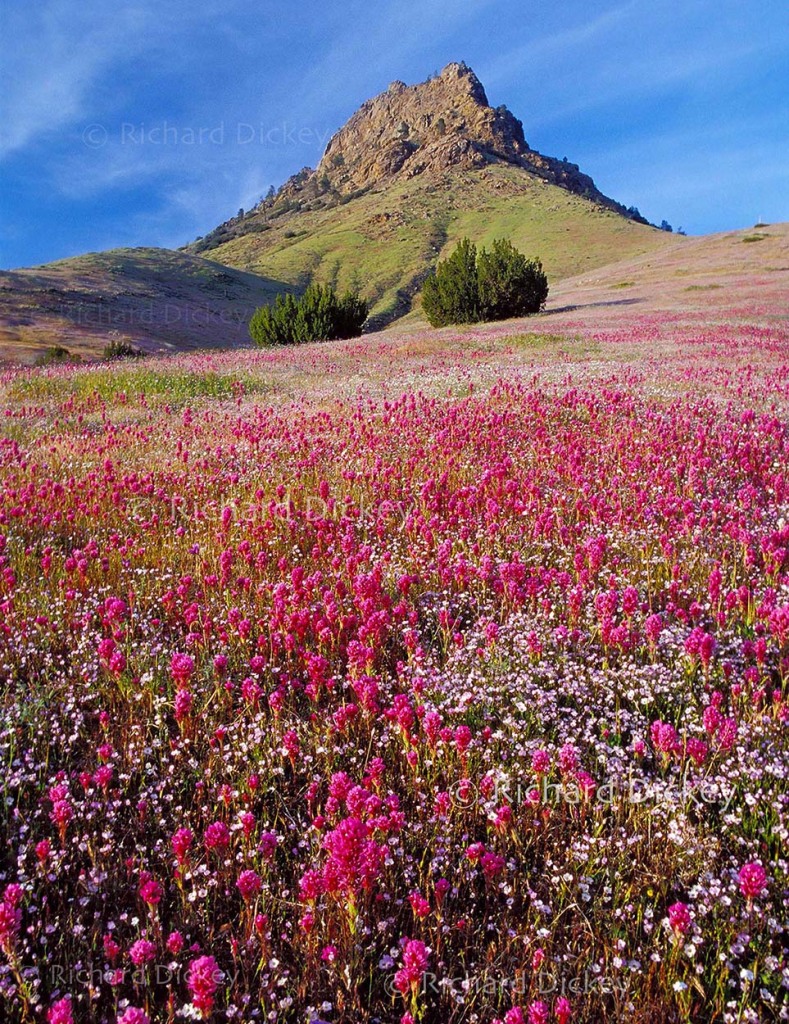
As the site evolves, additional photographs, Field Notes and historical material will continue to be released in phases. All images on this website were created by a human and not AI. Feedback and comments are encouraged.
Check back often—the landscape is still unfolding.
Enter the Photographic Archive
Explore four decades of California wildflower landscapes through 35mm film, Fuji GX617 panoramas, Field Notes and individual photograph histories.
Enter the Archive →