Owl’s Clover and Monolopia
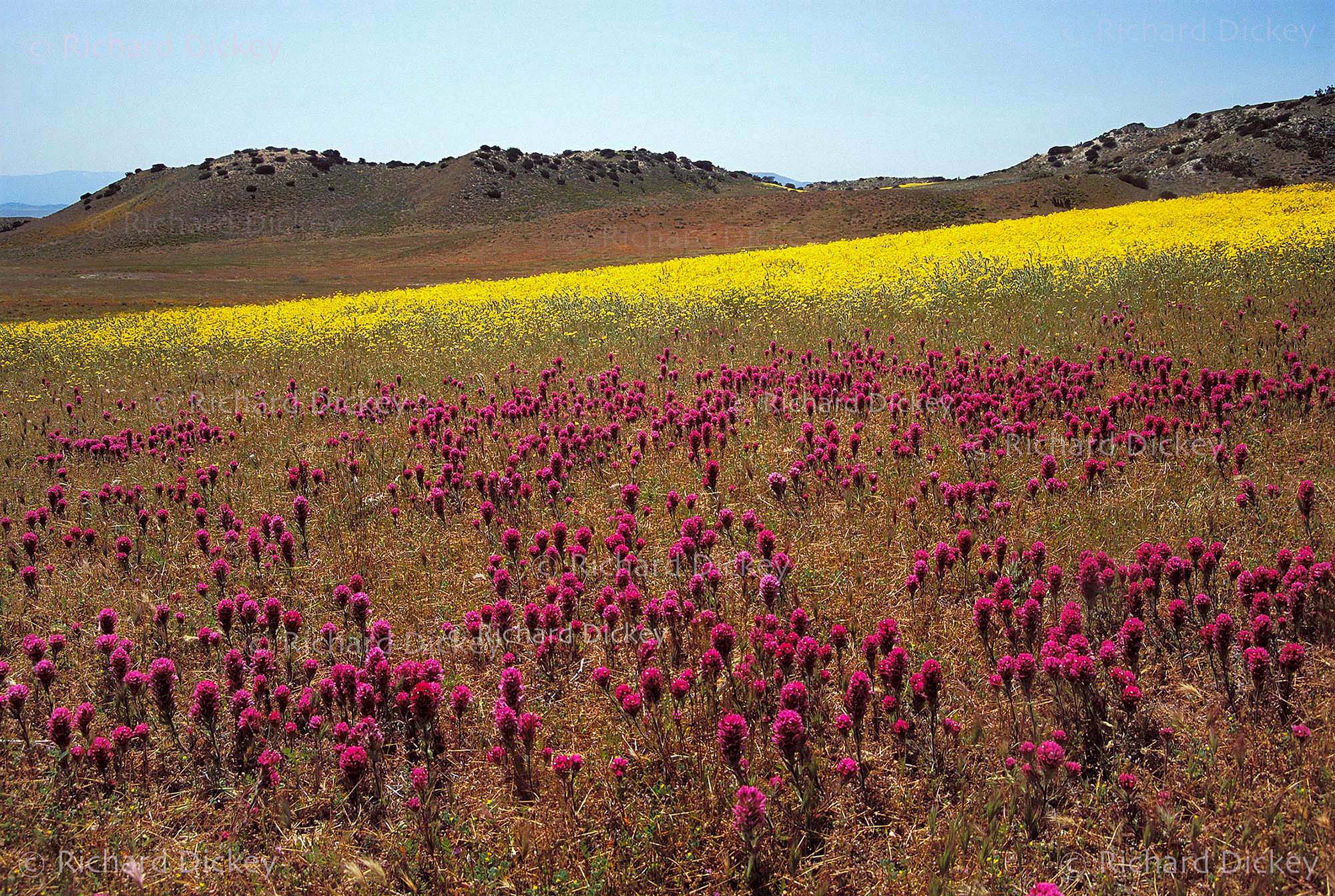
A foreground of magenta owl’s clover (Castilleja exserta) contrasts sharply with a broad sweep of yellow Monolopia (Monolopia sp.) across Tejon Ranch. The wide-angle perspective carries the yellow flowers toward the distant hills, where another narrow streak of Monolopia appears near the ridge.
Owl’s clover is not actually a clover but a semi-parasitic wildflower that obtains part of its nutrients through connections with the roots of neighboring plants.
The composition was arranged around the contrast between the magenta owl’s clover in the foreground and the striking band of yellow Monolopia behind it. Looking closely into the distance, another narrow streak of Monolopia appears near the top of the hill, repeating the yellow across several layers of the landscape.
Owl’s clover can appear in a range of magentas and pinks with occasional very rare white forms. Here, its saturated magenta color created an especially strong counterpoint to the yellow hillside beyond.
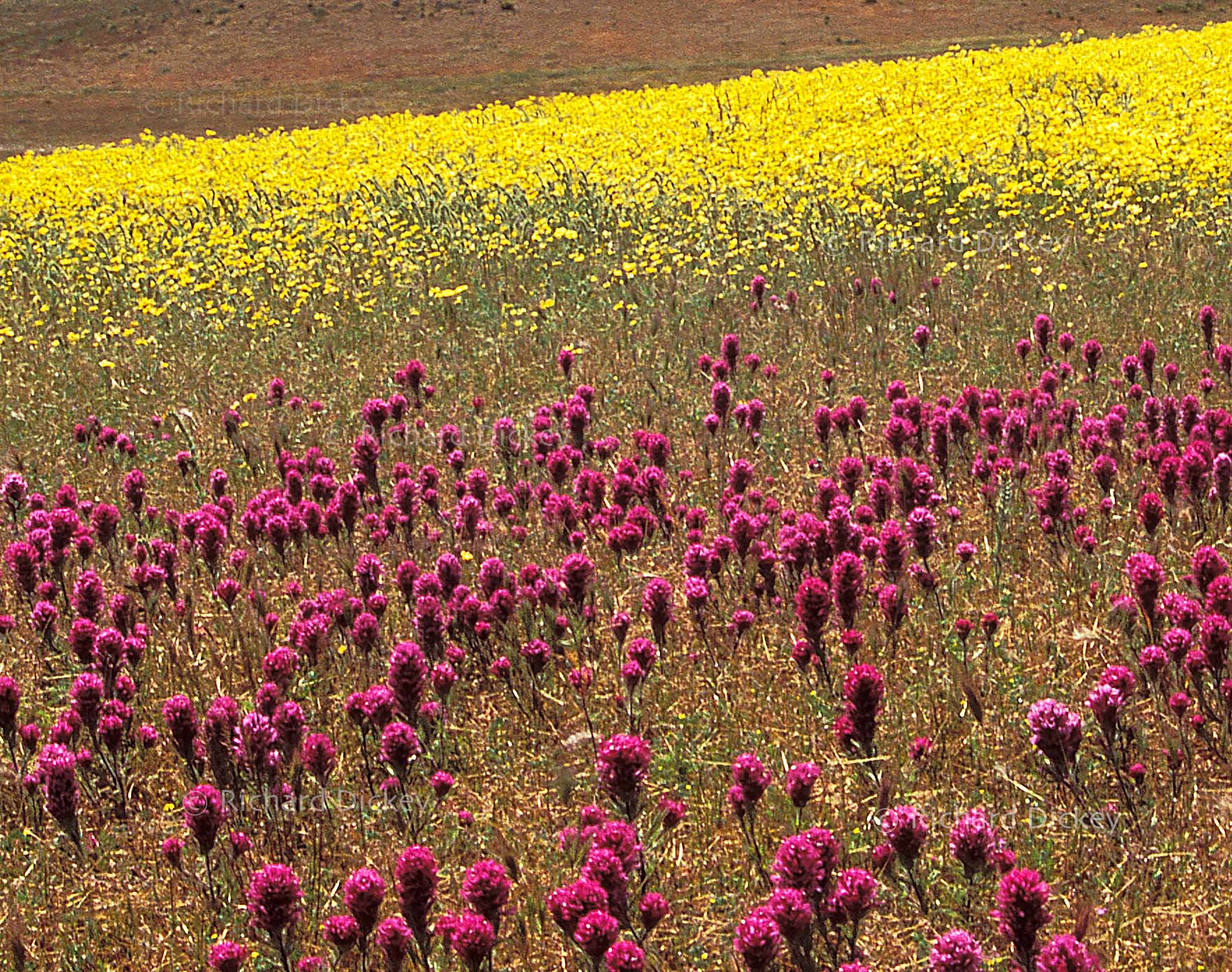
In the full photograph, the flowers first register as broad areas of magenta and yellow. The enlarged detail reveals the structure within those colors: owl’s clover (Castilleja exserta) rising among yellow Monolopia (Monolopia sp.) with a few small fiddleneck (Amsinckia menziesii) mixed through the scene.