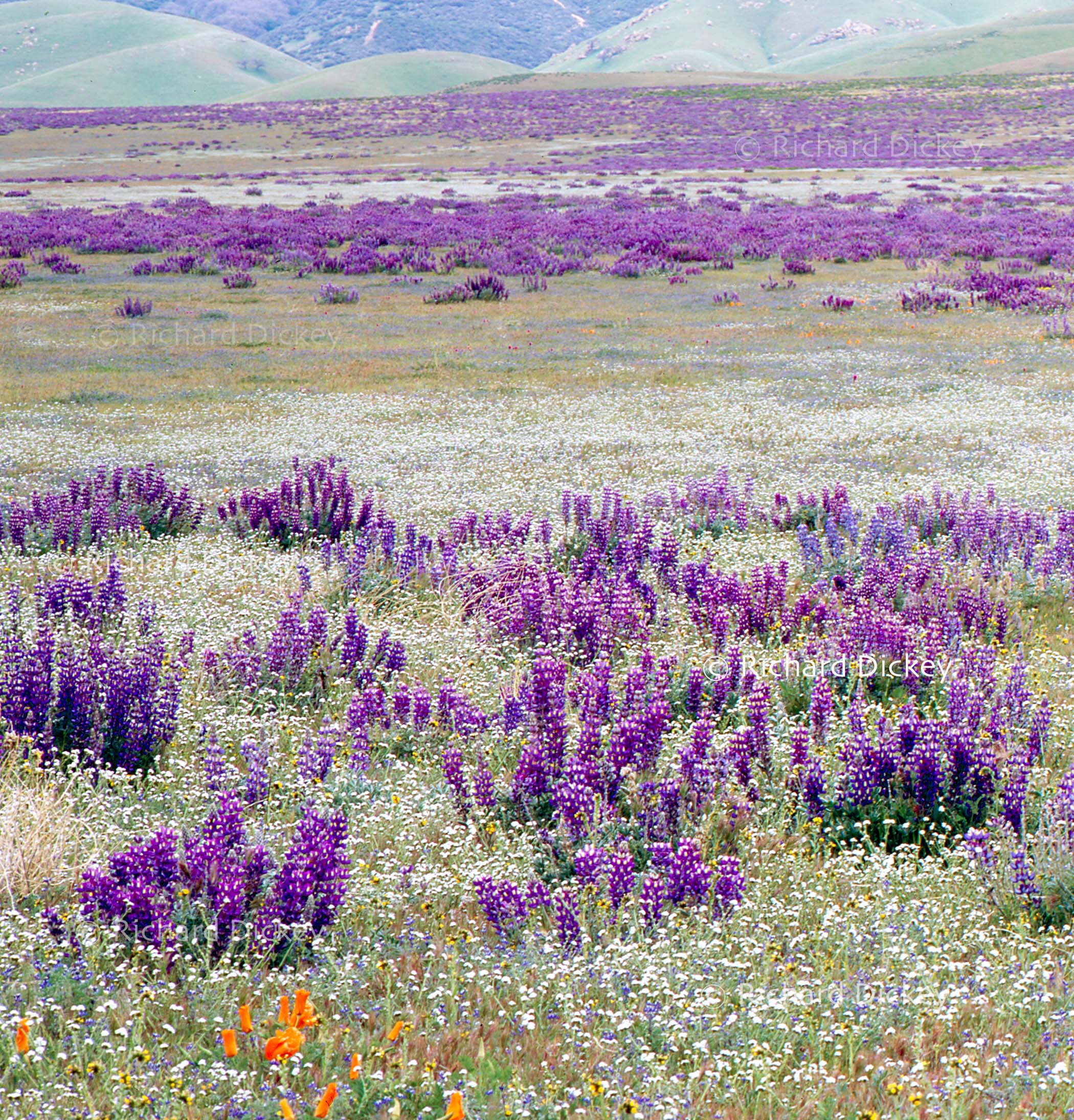
Adonis Lupine on the Alluvial Plain
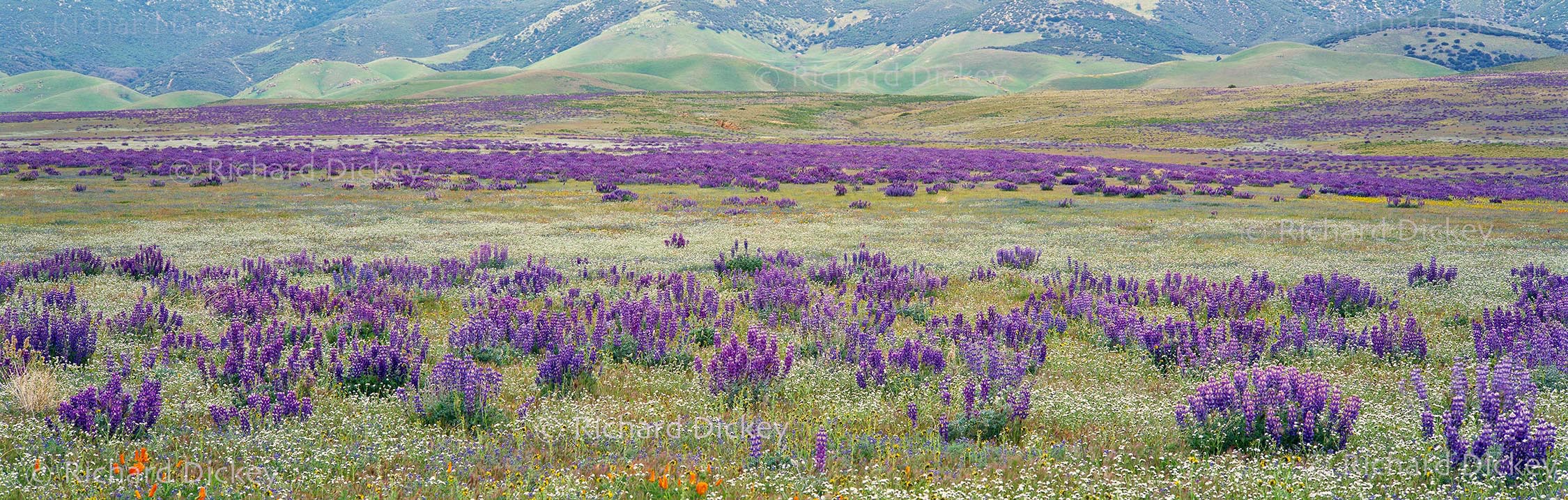
This alluvial plain on Tejon Ranch supports one of the largest concentrations of Adonis lupine encountered during decades of photographing California wildflowers. The broad stands of Lupinus excubitus spread across the base of the hills among California poppies, popcorn flowers, fiddleneck, miniature lupine and goldfields, creating a remarkably layered Mojave Desert bloom beneath soft, even light.
This part of the ranch has been a remarkably consistent location for Adonis lupine. Unlike the annual wildflowers that depend on the right sequence of seasonal conditions, these bush lupines are perennial. Their deep roots allow them to persist along the foot of the hills and return through changing years.
Conditions for this panorama were unusually calm. Very little wind moved through the flowers and a thin overcast of sheer clouds softened the sunlight, producing smooth illumination without the harsh contrast of a bright desert afternoon. The quiet conditions were particularly favorable for the 1/3-second exposure required at f/45.
The scale of the lupine stand was exceptional even by the standards of a landscape visited and photographed repeatedly over many years. The blue-violet Adonis lupines became the dominant structure of the scene while poppies, popcorn flowers, fiddleneck, miniature lupine and goldfields added smaller passages of color throughout the alluvial plain.
The complete panorama must be reduced considerably for online viewing, making the individual Adonis lupine flowers and much of their structure difficult to see. This enlarged section brings the blue-violet blossoms of Lupinus excubitus into clearer view—the same flowers that, when warmed by the desert sun, can release the distinctive fragrance that gives the plant another of its common names, grape soda lupine.